Guide Program

Tuesday, 26 March 2019

Build! Create! Invent!

After March Break, we spent two weeks working on a variety of activities for the Design Space Theme. 

Make Your Own Spinner
We had purchased kits to make spinners from the 20th UK 2020 Independent Trip Unit for Engineering Month (see instructions below) and brought them out tonight. Each Guide had a design template, cardboard and a bearing to make her spinner. Each design was unique!

Spaghetti Structures
Earlier in the year, we had a request to the do 'spaghetti and marshmallow building', which fit in well with our theme. Teams worked with raw spaghetti and mini marshmallows to build different structures. 


Bridge Building
To test our engineering skills further, we had a Bridge Building contest! Bridges were made from a strip of paper attached with masking tape between two tables 12 inches apart. We had to be creative with the weights, and used the scissors, rules and glue sticks from the supply box to test each bridge!


Design Your Own Invention  
Week Two was devoted to all things inventing. We started out by learning about the inventors of things we are all familiar with, including Frank Epperson (Popsicles), George Nissen (Trampoline), Louis Braille (Braille), and Albert Sadacca (Christmas Lights) before turning our attention to creating our own inventions. Each Guide or group was asked to come up with a invention that a girl their age could use to make day-to-day things easier or the community a better place. They also had to think about what their invention would cost to make, design a blueprint, and build a prototype. We didn't quite make it to the prototype stage, but everyone had fun coming up with unique inventions, including:
  • Self-Building Houses
  • Infoggable Mirror
  • Forever Hot Mug 
  • Self-Cooling Computer 
  • Magic Detangler 

Links:

Saturday, 9 March 2019

We Can Do It!

On March 9th, one Pathfinder and one Guider joined other Pathfinders and Rangers at the Canadian Warplane Heritage Museum in Mount Hope for an event called "We Can Do It!". Throughout the day, we explored life and the roles and experiences of women during World War II.

Girl Guiding and the War Effort

Activity #1 Upon arrival, each person had to assemble a box (which would have held a gas mask) and a name tag to wear throughout the day. We also picked up a National Identity Card and Ration Booklet.

We started the day learning a bit about what Guides and Rangers did for the War Effort, including Guide Gift Week in 1940. For Guide Gift Week, Guiding members throughout the British Empire (including Canada) were asked to contribute half a day's salary or income, or raise money doing odd jobs. The goal was to raise enough to purchase two air ambulances. Not only was this goal reached, but enough funds were raised to also buy a lifeboat (later named the Guide of Dunkirk for its roll in rescuing troops from Dunkirk), two mobile canteens for the YMCA, equipment for rest huts for the British Army, furnishing and equipment for the Trefoil Hut in Iceland for use of the Merchant Navy, and 20 motor ambulances for the Royal Navy. Guiding training allowed girls to be seen as very important and capable as they took on roles as nurses, munition workers, aircraft workers, pilots, ambulance drivers and mechanics.

Activity #2 We learned how to tie a 1940s-style Guide tie and then how to use the tie as a sling.

Life on the Home Front

Life changed drastically during the war, especially in Britain. Once war was declared, everyone carried a gas mask and National ID card. 

Food Rationing

In 1939, Britain imported 60% of their food, which meant rationing quickly came into effect to make the most of what food they had. Booklets were produced and demonstrations held to help people use rations healthily and effectively. Families had to register with their suppliers (butcher, grocer, market, etc.) for each item and could then only shop at that location as each supplier received sufficient amounts for those registered with them. Rations had to be collected each week as uncollected amounts did not carry over. 

Examples of typical rations:
  • Bacon or Ham - 4 oz per week for adults, 2 oz for children
  • Butter - 2 oz per week for adults, 1 oz for children
  • Cheese - 2 oz per week for adults, 1 oz for children
  • Eggs - 1 per week for adults, 1 every other week for children
  • Powdered Eggs - 2 per week for adults, 1 per week for children
  • Milk - 3 1/2 pints per child under 18 (later replaced by powdered milk)
  • Sugar - 2 oz per week for adults, 1 oz for children
  • Tea - 1 1/2 oz per week for adults (loose leaf) 
  • Meat - 1s 2d worth, if available [about $5 worth today]

Food Production
The "Dig For Victory" campaign turned empty land over to vegetable production. Vegetables that grow well and can be stored, such as brussel sprouts, potatoes, turnips, cabbage and carrots, were planted across the country. Families also took to raising hens, rabbits and pigs, picking and canning fruits and vegetables, and boiling rose-hips to make a syrup to supplement their Vitamin C intake. Bread became denser as flour is less refined.

Clothing
Clothing styles changed to use less fabric - rising hemlines, narrow lapels, no pockets or cuffs, narrow pant legs. Items such as nylons were simply no longer available. Communities would get together to swap items such as coats that were not being made any more. Everyone was encouraged to "Make Do and Mend", by cutting down adult clothing for children, unraveling sweaters and knitting new garments from the wool, and re-purposing everything they could. 

Daily Life
Gasoline is also rationed, so people walk or cycle to get where they need to go, and forego unnecessary travel. Guiding members worked on the War Service Badge, awarded for 96 hours of war-related service. Guides and Rangers helped in many ways, including running creches, entertaining children, collecting sphagnum moss, planting gardens, manning first aid posts and assisting officials. 

Evacuation!
With the threat of attack looming, families wanted to get their children to safety. Children from cities were evacuated to the countryside or even by ship to Canada. Some children went on their own, while others went with their entire school, relocating to a different location for the duration of the war. When they reached their destination, evacuees were often met by Guides and Scouts who welcomed them and helped them reach their new home. Each evacuee carried a suitcase or brown paper package of their clothing, ID tags, National Registration Card, and Ration Book. 

Activity #3: We split up into smaller groups, each with a set of cards with the names of items that children might bring with them. Our challenge was to choose 20 items, including 6 mandatory items, for a child evacuee to pack. 

Activity #4 We all worked together to prepare our lunch, consisting of foods that would have been available with rations - home-made bread, cheese (grated to make it go further), butter, jam, SPAM, canned corned beef, apples, tea (loose leaf), powdered milk, and home-made war cake.


The Battle of Britain
"Never before have so many owed so much to so few" (Winston Churchill)

Operation Sea Lion was launched by the Nazis in July 1940 with the goal of destroying England's airbases in preparation for invasion. Troops were massed in France, across the Strait of Dover, the narrowest part of the English Channel, and German aircraft outnumbered Allied forces 4 to 1. Concentrated aerial attacks began in August and continued through September. Britain succeeded in repelling attacks and inflicting damage to enemy planes because they used centralized coordination to determine where each of their fighter squadrons would go, making the best use of their scant resources. Fighter Command was located at Bentley Prior and received intelligence about position of troops, incoming squadrons, and other information and then relayed it onward. Basic radar was used, but could only track planes over the sea. Once plans reached land, radar could no longer be used. 95% of the staff at Bentley Prior were female.  Staff used table-sized maps and wooden blocks with information about each allied and enemy squadron, including its identifying number, number of planes and altitude in thousands of feet, to plot the location and movements of aircraft. 

Activity #5: We gathered around a plotting map and worked in pairs to read information about aircraft movements. As part of the activity, we had to label and move our plotting blocks around the map and place coloured arrows to indicate sightings and direction of flight. We then discussed how plotters would use the information to determine which squadron to send up against incoming enemy planes.
Communications
A variety of different communication methods and codes were used to send messages and relay information during the war. The Enigma Machine was invented by the Germans and had a code that changed daily. Alan Turing designed an electromechanical machine that could break the Enigma code faster than humans. Before this device came into use, the Admiralty was losing 33 ships per day due to an internal spy who was sending fleet movements and information to the enemy. Codes were used to encrypt messages and Guides and Rangers often acted as messengers as their training including carrying a message in their head and delivering it accurately and they could be trusted to keep what they heard a secret. 
Activity #6: Semaphore was part of the Guiding program in the 1930s and 1940s, and was useful for sending messages across distances, from ship to ship, and from ship to shore. We all had a go at signalling different letters and trying to position our arms correctly.

Activity #7: Morse Code was also part of the Guiding program and widely used for telegraph communications. We were able to use buzzers and try to send words between partners.

Activity #8: Many women were employed as code breakers to decipher incoming messages. They would also encrypt outgoing messages so that they would be incomprehensible to anyone without the key! We got to try to decipher numeric codes and shifted alpha-numeric codes. 

Activity #9: Our final communications task was to dial a rotary phone - a task that was new to most if not all of the Pathfinders and Rangers! Undaunted, they were shown how to dial the phone and then competed to see who could complete a call the fastest - 16 seconds is the record to beat. 


Wartime Employment
During the war women took on non-traditional jobs in order to free men to join the forces fighting in Europe. Women worked became munitions workers, built aircraft, trained as drivers and mechanics, and made other supplies vital to the war effort. 

Activity #10: Aircraft, and other metal vehicles and machines, are held together with rivets. Women became expert riveters, with one person putting in Clecos (temporary rivets) to hold the pieces in place while another person came behind removing the Clecos ahead of the riveter. We raced to see which teams could put complete a line of temporary rivets the fastest, and then who could take them out again!

The wings of aircraft are made of several layers, making them both lightweight and durable. Starting with a wood frame, a cover of canvas is attached. The canvas is painted with a substance called ope to make it stronger and waterproof. A layer of aluminum is added, and finally a coat of paint. 
Activity #11: To see what the process to build aircraft wings would have been like, we worked in teams to assemble rib wings in the fashion they would have been during World War II.


Women Pilots
The final part of the day was spent learning a bit more about the role of women pilots. Women would ferry planes between bases in Canada and to Newfoundland. One of the Rangers was dressed in the many layers worn by pilots at this time - uniform shirt and jacket, gauntlet gloves, leather fleece-lined hood, goggles, life vest and parachute.

Links:

Tuesday, 5 March 2019

Pancake Tuesday

To kick off March, we celebrated Pancake Tuesday with the Pancake Challenge!

We started off with our usual opening ceremony, then the Pathfinders and 3rd Year Guides headed into the kitchen to make pancakes and hot chocolate for everyone to enjoy!. 

While waiting, the 1st and 2nd Year Guides set up the tables and chairs and played a game of Pancake Tag made up by one of the Guides. 

After eating and cleaning up, we found a bit about the History of Pancake Tuesday:. In the Christian tradition, the 41st day before Easter is known as Shrove Tuesday and is a day when people went to church to confess their sins and prepare themselves for the fasting of Lent, the 40 day period before Easter. Shrove comes from the word 'shrive', which means to give absolution after hearing confession. The practice of Pancake Tuesday came about as this day was also the last chance to use up food that couldn't be eaten during the 40 days of Lent, including eggs, fat and milk. The earliest known English recipe for pancakes dates from the 15th century, although pancakes had been eaten in other countries for centuries before that. 

We also discovered some interesting Pancake Records:
  • The largest pancake was made in Rochdale, Manchester, UK in 1994, measuring 15.01 metres in diameter, 2.5 cm thick, and weighing 3 tonnes.
  • Australian celebrity chef Brad Jolly holds the record for most pancake tosses in 1 minute - he flipped a pancake 140 times in one minute at an event in Sydney in 2012.
  • The record for highest pancake flip belongs to Dominic Cuzzacrea, who flipped a pancake 9.47 meters in New York in 2010.
  • Ross McCurdy from Kingston, Washington made 1,092 pancakes in one hour in 2013 - the record for pancakes made by a single person in an hour.
  • An event held at the University of Sheffield, UK in 2012 had 890 people tossing pancakes at the same time.
  • A team of 175 volunteers using 37 griddles made 76,392 pancakes in 8 hours in Atlanta, Georgia in 2009 - the pancakes were served to about 20,000 people.
To use up some energy, we then played Flap the Pancake, a relay game, where each Patrol has a paper pancake that has to be flipped to the opposite end of the playing area and back using another sheet of paper. The first Patrol to finish wins!

Our final activity was to Design the Ultimate Pancake. There were some really unique ideas for pancakes, including the Riverdale Pancake, which had ice cream, whipped cream, sprinkles, chocolate sauce, bananas, strawberry sauce, gingerbread, and lots of fruit (fortunately we were designing on paper!). 
We ended with reminders for next week (no meeting - it's March Break!) and closed with Taps.

Tuesday, 26 February 2019

Pets & Animals and Culture Night

February ended with our second "By Guides, For Guides" night. We started out with our usual opening ceremony, then the Thistles led the first half of the meeting on the theme of Pets and Animals, followed by Daisies and their Culture Night. 

The Thistle Patrol had planned three activities about Pets and Animals for their half of the evening:
  • Big Dog Tag - In this game, "It" is the "Big Dog". The Big Dog chases other players, if someone is tagged, they sit on the floor with their legs out in front of them. In order to be un-tagged, two other players have to come and sit on the floor as well, using their legs to make a T. After counting to 5, all three players rejoin the game. Players cannot be tagged if they are squatting or if they are sitting in a T.
  • Lost Pet Skits - Guides were asked to form small groups and each group made up a skit about a losing and finding a pet. 
  • Twag - In this game, "It" is an Owl and everyone else is a mouse. When a mouse is tagged, they become a baby owl and go and sit in the Owl's nest (a corner or section of the playing area). One player is an "Eagle" who turned the baby owls back into mice.

The Daisy Patrol had chosen Culture Night as their theme and had four activities:
  • Facts About the Philippines - One Guide shared some information about the Philippines.
  • Scotland Trip - One Guide shared pictures and told about her trip to Scotland to visit family.
  • Luksong Tinik - We then played a traditional game from the Philippines. Two players sit on the ground with their legs out and soles of their feet touching. The other players jump over their feet. One of the seated players then places her foot on top of the other players foot, heel to toe, and the other players jump over this increased height. The height in the centre continues to be raised using feet and then hands until other players are unable to jump over it. For better instructions, visit Filipino Games
  • Tinikling - We tried Tinikling, a traditional folk dance from the Philippines. We have lots of bamboo poles for gadget making, so were able to split up into groups of 3-4 Guides. Two people kept the rhythm with the poles, going slowly, and the remaining girls learned to dance in and out of the poles without getting their feet caught! Download the instructions and watch a video under "Downloads" at the bottom of this post.
  • Food! - The final activity was a taste test with Licorice All-Sorts from Scotland and Sausage and a Fruit and Milk Salad from the Philippines - all very yummy!

Everyone had done a great job preparing their activities and had a lot of fun trying some new activities. We ended with reminders for next week and closed with Taps. 

Downloads: 

Tuesday, 19 February 2019

World Thinking Day 2019

This week the Sparks, Brownies, Guides, Pathfinders and Rangers in Caledonia got together for our annual World Thinking Day Event. The program was planned and run by the Pathfinders and Rangers, assisted by the 3rd Year Guides. 

As everyone arrived, they were directed to the appropriate part of the room for their Unit. We provided colouring sheets and wordsearches, as well as supplies for Guiders to make name tags dividing their Unit into three groups. Each Unit performed their usual opening ceremony, followed by a brief introduction to the theme of Leadership. We had four activities and each group worked through them with a Pathfinder/Ranger and 3rd Year Guide leading. 

Dance With Your Past
In this activity, each person is asked to think of their favourite song and dance while singing in their head. They are then asked to talk about how easy or hard they found the experience and if they would have done the same thing two years ago.
 

Hey, That's Not Right!
It's 1908 and your brother just got a new book for his birthday called Scouting for Boys. It's about learning life skills, camping and making new friends. It sounds really fun and you want to take part, but people say that camping and adventure are only for boys. You don't agree and get together with some of your friends to let people know that girls can do anything!"

Each group split up into smaller groups of mixed Sparks, Brownies and Guides to create posters about all the amazing things girls can do!
 

Spot the Leader at Kusafiri
"Kusafiri World Centre held an event in 2017 called Arts4Change in Madagascar. Participants explored ways to use creativity to build leadership skills. Leadership doesn't always have to be seen or heard, sometimes it can just be felt!"

Players stand in a circle. One person leaves the room and another is secretly chosen to be the leader. The leader makes an action, sound or movement and everyone else in the circle has to copy them. The leader can change their actions at any time. The person outside comes back into the room and stands in the centre of the circle. As the rest of the group continues following the leader, the person in the centre has three chances to guess who is the leader. 
 

In 2119, Can You Imagine?
For our fourth activity, we asked everyone to think about what it might be like to be a Girl Guide in 2119, 100 years from now by drawing a 22nd Century Guide. The twist to this activity was that each drawing would be completed by three people. The first person drew the head and neck, then folded their part over and let the next person draw the torso and arms, this part is also folded over so only the bottom third of the page is showing and the third person draws the legs and feet.

Lost in Time Activities
As each group completed the activities on their own within the time frame of the meeting, we also planned some no-equipment activities from the Lost in Time section of the Activity Pack. 

  • You've encountered some Scouts from the past on their way to Brownsea Island, teach them a song for their campfire.
  • Can you name the 5 World Centres? (Pax Lodge, Sangam, Our Chalet, Our Cabana, Kusafiri)
  • You meet a group of Girl Guides from the future who speak a language you don't recognize. Find a way to say "Happy World Thinking Day" without using words.
  • Try to say the Spark Promise backwards. (Friend A Be and Share to Promise I)
  • You meet some Girl Guides from the future. What is one thing you want to know about Guiding in the future?
  • Name one country you'd like to learn more about and why.
  • Say a tongue twister.
  • When you do something which inspires other people you're practicing leadership. Ask if anyone can share something they did in the last week which inspired someone.
  • Who can come up with the most inventive upgrade for their time machine?
  • If you were given one wish to change your community for the better, what would it be?

We ended with Spark Closing, Brownie Closing, and Taps, before saying goodnight to everyone.

Links:

Tuesday, 5 February 2019

Time Machines & Memes

This week we did our pre-Thinking Day activity and learned about memes with the Forget-Me-Not Patrol. 

We started with our usual opening ceremony, and then moved straight into our three activities for the evening. First up, each Patrol had to finalize their plans for their "meetings" (each Patrol will be running half a meeting or about 45-60 minutes of activities for the rest of the Unit). 

Our second activity was to make time machines for Thinking Day! Each girl has been given a cassette case and a template to make a mini-girl to put inside the case. We used sharpies to decorate the time machines. 
  
Finally, at 7.30pm, we turned the meeting over to the Forget-Me-Not Patrol and their Memes and Glow-in-the-Dark Meeting. The Patrol had planned four activities for their meeting, which filled up the second hour of the meeting. 
  1. Meme Tiles - Each Guide created her own meme using markers on a half-sheet of cardstock. 
  2. Manhunt - In their version, two players are it and the game is played with the lights off. (Basically a big game of tag as we were indoors, the game is usually played in a wooded area where there are lots of places to hide and outfox the players who are it.)
  3. Mama Bear - A game made up by the Patrol: One player is the bear and they hide in the dark. Everyone else waits for the bear to hide and then comes into the room and say "I'm not scared of bears tonight; my daddy got them all last night". They then try to find the bear in the dark and when someone finds her, they say "Beep" and run to the door. Play continues until most/all of the players have found the bear.
  4. Charades: Meme Edition - The Patrol came up with some different memes and the slips of paper were drawn by small groups and used to create a charade for the rest of the group to guess. 
Everyone had fun and the Forget-Me-Nots did a great job leading their activities!. We ended with reminders for next week (Pets/animals with the Thistles and Culture Night with the Daisies) and closed with Taps.  

Tuesday, 22 January 2019

Art-tastic! Painting

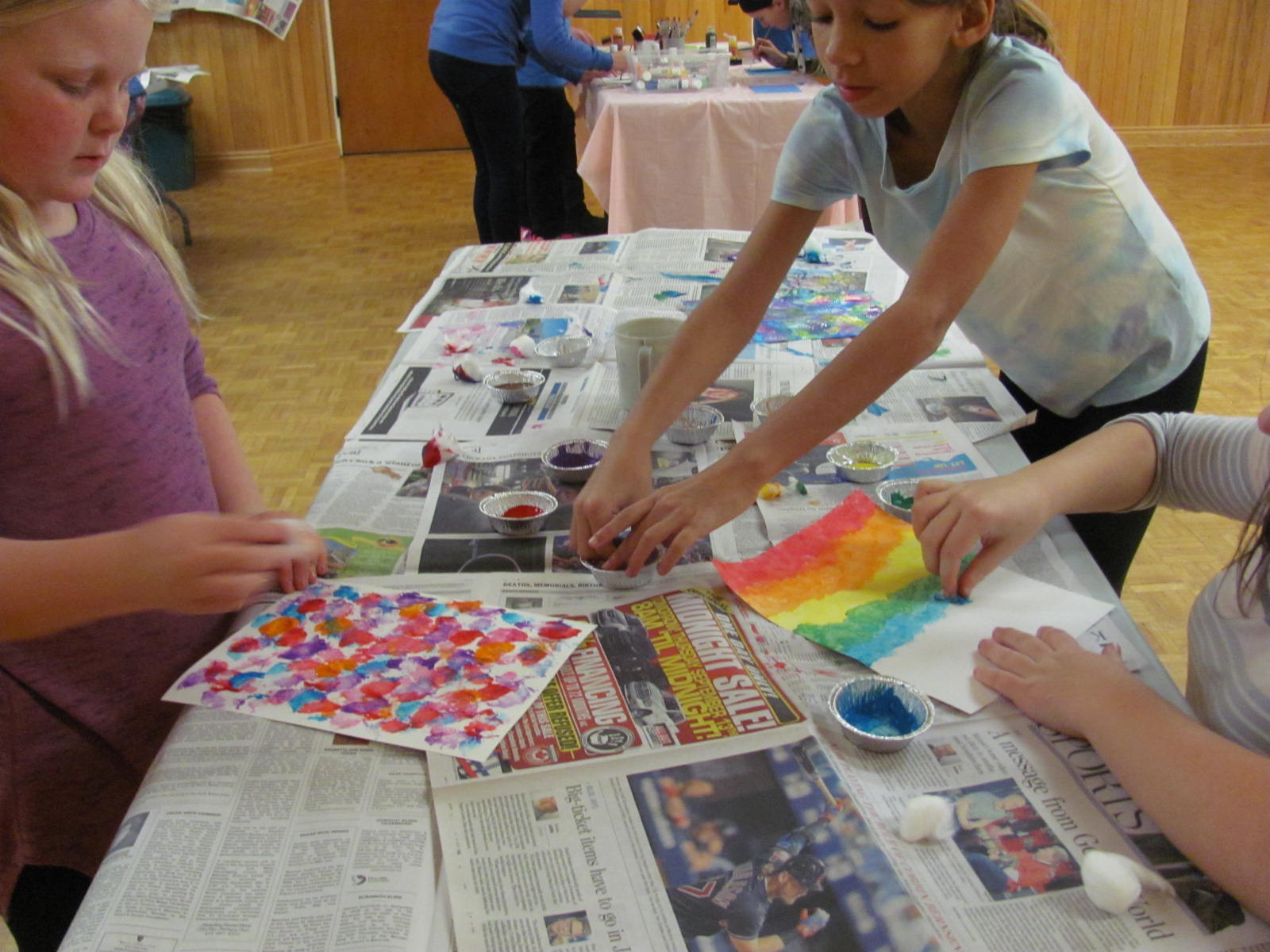
From our planning session, we discovered that the group had lots of ideas for painting activities, so we devoted this week's meeting to painting! 

We started with set up and our usual opening ceremony. Once all the tables were set up and covered, we introduced the five activities for the evening:
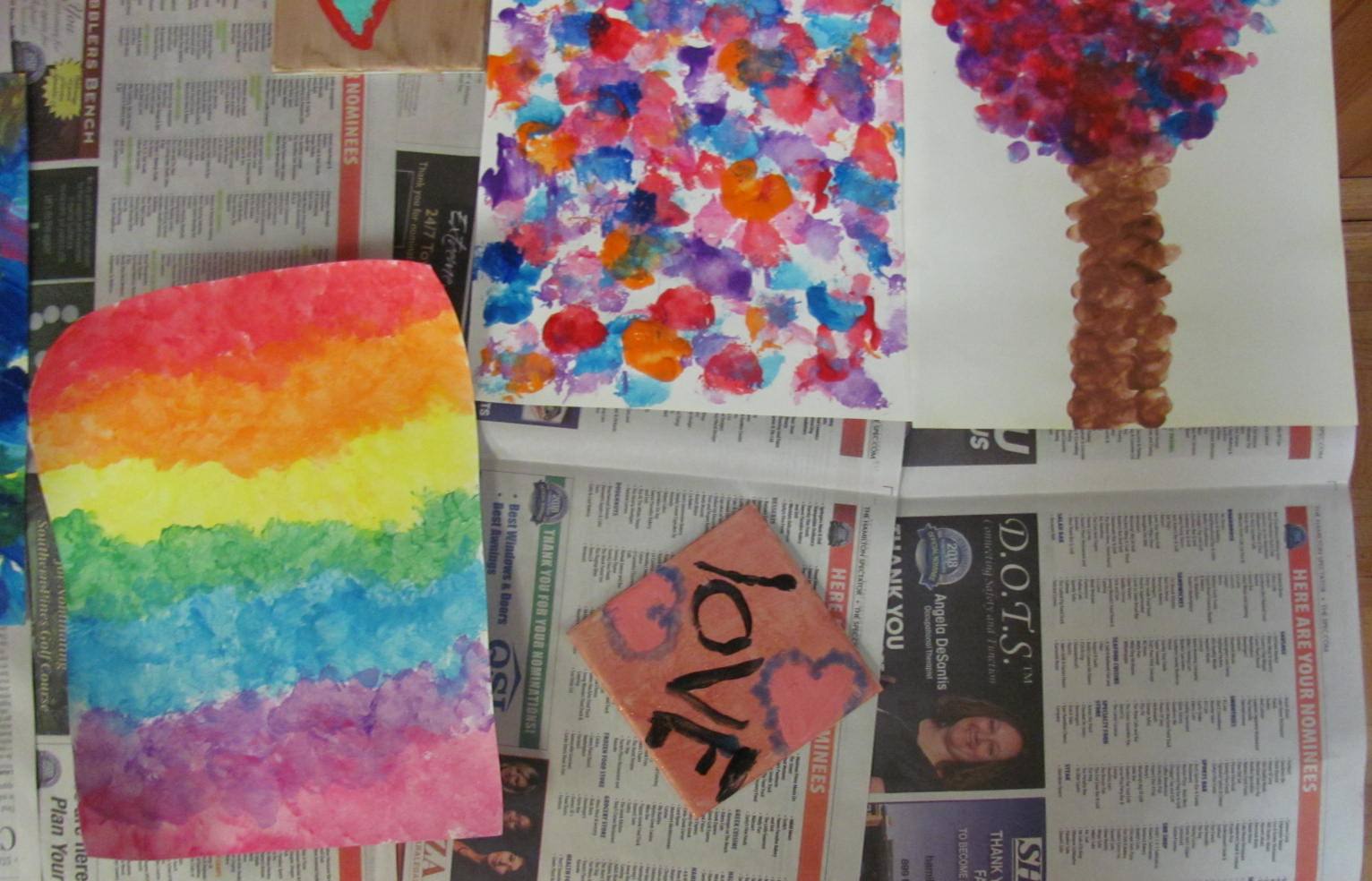
  • Painting on Canvas - We provided stretched 5" x 7" canvases, acrylic paints and brushes or all different shapes and sizes. Canvases were 2 for $1 at the dollar store and paints and brushes were from our Unit supply.
  • Watercolours - We used the 3 watercolour paint sets in our paint box and provided blank card stock as a base. This is better able to handle the water than regular paper.
  • Splat Painting - Girls were provided with cardstock, cotton balls and small amounts of washable paints in small tart pans. Although the suggestion had been splat painting, most of the girls used the cotton balls to dab and smear paint when creating their designs.
  • Finger Painting - This was a request we hadn't expected, but were able to provide washable paints and glossy paper for this activity.
  • Tile Painting - We did this activity earlier in the year and it was popular. Tiles were from the Habitat Reuse Store and we used the same acrylic paints and brushes provided for painting on canvas.
Girls were able to choose what they wanted to work on and spend as much or as little time on each piece of art as they wished. Some did only one or two activities, while others tried out everything.
There was lots of clean-up from this meeting, but we had allowed 30 minutes for clean-up and closing - and it was needed! We ended with reminders for next week and closed with Taps.